
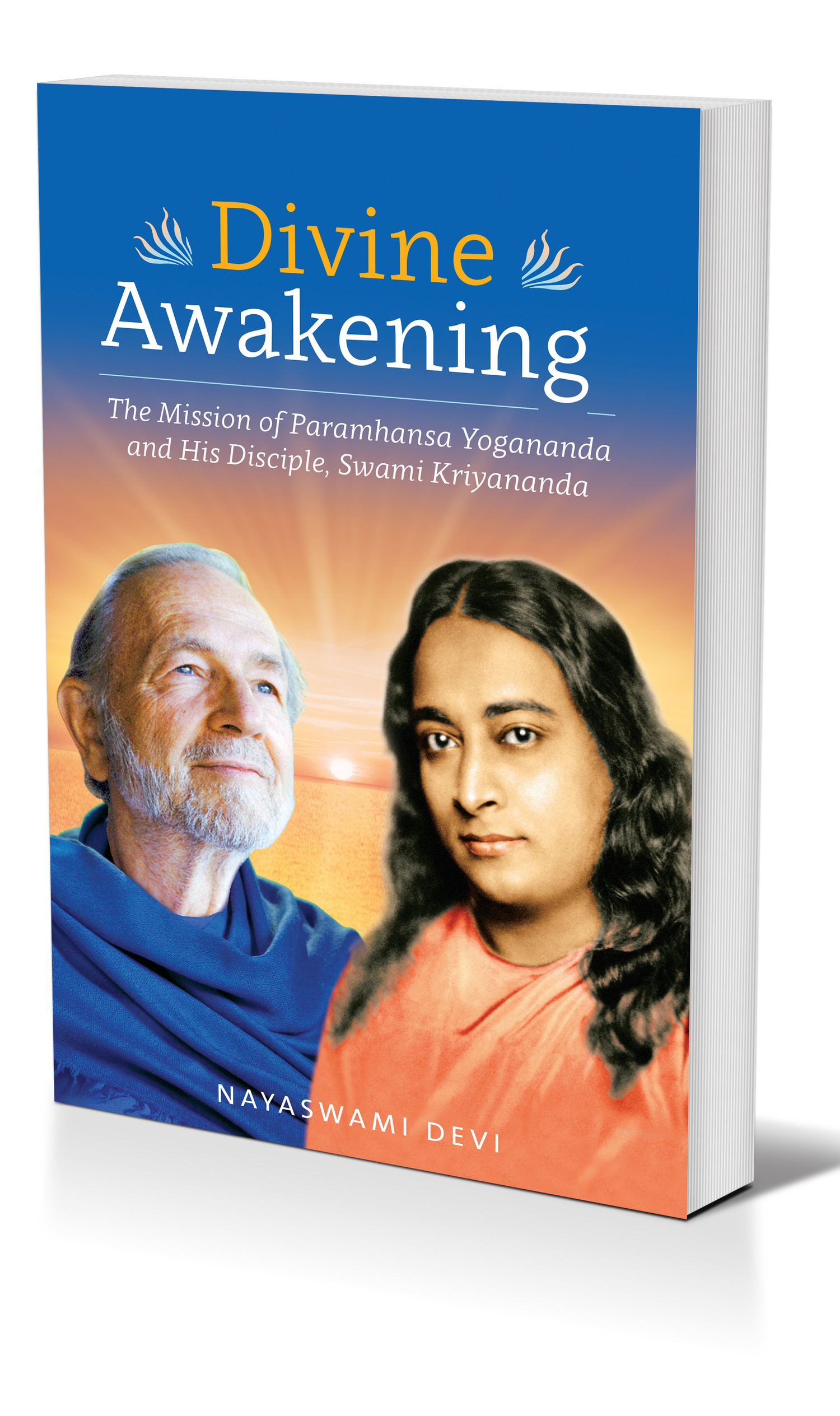
Swami Kriyananda described Yogananda’s role as a world savior in this way: "My understanding is that, on this planet, Master was—and has been for many incarnations—a special instrument of God who keeps returning in different forms to render special assistance according to God’s requirements for the world’s evolution. Many are the roles he has played."
Yogananda himself said, "In the past I have been, among other things, a ruler, a poet, a warrior, and a hermit many times. My role as a ruler explains a natural interest I have in national and international affairs, and a certain aptitude for them."
Three of Paramhansa Yogananda’s past lives are particularly relevant to his world mission in this incarnation: Arjuna, the warrior-prince of the Mahabharata, William the Conqueror of England, and Ferdinand III of Spain.
Yogananda’s Life as Arjuna—The Warrior Prince
During Babaji’s incarnation as Krishna, his closest disciple, friend, and ally in the events of the Mahabharata battle of 800 or 900 BC was the great warrior Arjuna. Master tells us that he himself was Arjuna. The Bhagavad Gita, one of the world’s greatest scriptures and a central part of the Mahabharata, consists of the dialogue between Krishna and Arjuna on the eve of that battle. Krishna’s discourse is the essence of all the Vedic wisdom of India.
Paramhansa Yogananda gave the world a unique explanation of the true meaning of Krishna’s teachings. Having been Arjuna himself, he had actually been present when Babaji-Krishna shared the divine wisdom of the Gita. Yogananda’s commentaries therefore have the authenticity of a God-realized disciple conveying the true meaning of his guru’s sacred teachings.
Swami Kriyananda said of Master’s life as Arjuna, "We [his direct disciples] found it easy to believe that he had been that mighty warrior, for Master’s incredible will power, his innate gift for leadership, and his enormous physical strength (when he chose to exert it) all pointed to someone with the tendencies of a mighty, conquering hero."
Yogananda’s Life as William the Conqueror
Yogananda often told his disciples that he had been William the Conqueror (1027–1087) during ascending Kali Yuga. He came as a divine instrument with the mission to forge a patchwork of loosely knit, warring fiefdoms into a single nation. Historians describe William as magnetic, powerful, and determined, one who accomplished what had never before been done in building a unified kingdom.
Of the Battle of Hastings in 1066, the historian E. A. Freeman wrote this analysis: "The Norman Conquest has no exact parallel in history, largely owing to the character and position of the man who wrought it. The history of England for the last eight hundred years has largely come of the personal character of a single man [William]."
William, also known as William the Great, established England as what has become the oldest continuous government in the world—the second-oldest being the United States. Yogananda explained that his mission as William was to restore England to Christianity, breaking from Scandinavian Norse influences—a crucial step in the spiritual evolution of the West.
William was deeply religious, never missing a day of Mass as an adult. In a time of moral laxity, William remained faithful to his wife, Matilda. Collaborating with his close friend and advisor, Archbishop Lanfranc, William established and rebuilt many monasteries, renewing faith in the Christian Church.
An amazing testament to the spirituality of William is found in the January 1999 issue of the Catholic journal St. Anthony Messenger: The famous prayer attributed to St. Francis—beginning: "Lord, make me an instrument of Thy peace. Where there is hatred, let me sow love," and ending with "[it is] in dying that we are born to eternal life"—was not, in fact, written by St. Francis. The earliest known version of it was discovered in the breviary (prayer book) of William the Conqueror!
As he did in his incarnation as Yogananda, William succeeded in the divine challenge that was given to him: establishing a spiritual beachhead on foreign soil for the upliftment of humanity.
Yogananda’s Life as Ferdinand III of Spain
Yogananda’s life pattern continued as Ferdinand III, king of Spain (1200–1252), in ascending Kali Yuga. He was known as El Santo (the saint) for his deep faith, austerity, and humility.
At age ten, he fell gravely ill, and his devout mother prayed to the Virgin Mary for his healing. By the next morning he was miraculously cured, after which he dedicated his life to Mary. Yogananda, similarly, experienced a miraculous healing as a child, and was devoted to the Divine Mother throughout his life.
From 1224 onward, Ferdinand campaigned against the Moors to reclaim Spain for Christianity. After twenty years of unwavering effort, Ferdinand successfully freed Spain from five hundred years of Moorish dominance. During his campaigns, he was known to wear a hair shirt under his armor, and to fast and pray before each battle. Filled with devotion and faith in God, he was consistently victorious in every military campaign.
Ferdinand always carried a small ivory statue of the Virgin Mary on the pommel of his horse’s saddle. Interestingly, William died due to an accident when his horse stumbled, and he was thrown against the pommel of his saddle.
On his deathbed in 1252, Ferdinand called his son and heir, Alfonso X, to his side and told him, "Son, you well see how my life is ending, and I am leaving to give my soul to Him Who created it and redeemed it. Tomorrow you will be king of all these realms of Castile and Léon. Fear, love, and obey God, and join your will and deeds with Him, and you will have a good end. Do not fail to do good while you can, as these good works will remain with your soul, and everything will pass before you like a dream. Rule the people justly and follow my instructions to continue the task of compiling the laws so we can govern all people with the same consistent code."
Then, as his soul prepared to depart this world, he prayed, "Lord, naked I came from the earth, and naked I return; receive my soul." Laying aside his crown and royal robes, Ferdinand said that throughout his life he had never felt like a king, but rather a monk. In death, he donned the robes of a Franciscan monk.
His body was laid to rest in Seville Cathedral, and it remains incorrupt to this day, as do William’s and Yogananda’s. Canonized as a saint in 1671, Ferdinand is revered as one of the greatest monarchs of the Christian world, combining military genius, deep devotion to the Virgin Mary, and a just rule exemplifying the integration of spiritual and worldly leadership.
Though created during Kali Yuga, the nations ruled by William and Ferdinand foreshadowed Dwapara Yuga values: unity, justice, faith in God, and higher consciousness—influencing national development to the present day.
--Excerpt from Divine Awakening by Nayaswami Devi


1 comment
Ruth Minnick
Looking forward to receiving my copy.
Leave a comment
This site is protected by hCaptcha and the hCaptcha Privacy Policy and Terms of Service apply.