

It has been said that a culture is known by the people it reveres. Our “modern” world showers the highest admiration upon movie stars, musicians, and athletes. We’ve literally placed our standard of happiness on idol worship!
And what of the saints? They rarely, if ever, appear on our lists of celebrities. Yet, it is the saints whom we truly should celebrate. For what is it that we are actually seeking behind the fleeting allure of name, fame, and wealth? It is lasting happiness. The saints are the true custodians of religion, not because they guard rigid dogmas, but because they hold the keys to that inner joy which nothing in this world can take away.
Growing up in an Italian family, soccer—or futbol, as we call it—was woven into the fabric of my early life. I still vividly remember attending the World Cup in 1994, the last time it was hosted in America. I was there in the stands at the Meadowlands in New Jersey, watching Italy play Norway. When Dino Baggio scored (I believe from a cross from Signore), the stadium erupted.
Soccer has always been more than just a sport to me. It is universally called "the beautiful game" because it possesses a unique power to unite people of every nation, culture, and background. There is a profound beauty in seeing jogo bonito ("the beautiful game") played in its full, flowing splendor. Over the years, my experience with soccer helped me understand another, even more beautiful game that we are all playing: the game of Life itself.
Swami Kriyananda once wrote a beautiful, lighthearted song called "Life Is Beautiful." Its simple lyrics offer us a perfect manual for playing this beautiful game of divine attunement:
Life is beautiful, life is gay,
When I give myself away;
When I live to please Thee, Lord,
Dancing in Thy ray.
The true object of the game, then, is to give ourselves away—to live in a way that pleases the Divine.
But what is it that actually pleases God?
I am reminded of a story about a man who had a near-death experience and met Jesus Christ in Heaven. Filled with sudden inspiration, the man told Jesus that he loved him so much he would build a magnificent temple for him on earth. Jesus’ response was entirely indifferent. Hoping to please him, the man then offered to create a massive, towering sculpture of Jesus. Again, Jesus responded with complete lack of interest.
Puzzled, the man asked, “What, Lord, do you want me to do?”
Jesus answered simply, “I want you to love the person you are with.”
Glossing over this, the man said, “Okay, but what do you want me to do? What big project do you want me to undertake?”
Reiterating his point, Jesus responded, “Love the person you are with.”
Exasperated, the man said, “Lord, I will do what you ask, but it won’t work.”
To which Jesus responded, “Yes, it will. By loving the person you are with, it will create a wave of divine grace that will envelop the planet.”
We so often miss the point. We think God is pleased only when we take on grand, outer projects. But what He truly cares about is the spontaneous, loving nature of our hearts. He wants the goodness of our souls—the unique gift that only we can give away, as Swamiji wrote in his song.
To play any game well, we must first understand the rules, the boundary lines, and the goal. Only then can we play with true freedom and joy. The second verse of Swamiji’s song shows us how to navigate the field:
Let me see Thee everywhere
Hear Thy melodies in the air.
Let me feel Thy strength in me.
Give me joy to share.
The game is to see God everywhere—and to feel Him in everything, starting with our own self. As Paramhansa Yogananda beautifully prayed: "Lord, give me Yourself, that I may give Thee to all."
This is the highest way to play the beautiful game of divine attunement. It is the mystery of the Holy Cross: the vertical line of loving God through deep inner communion, and the horizontal line of loving and serving Him in all through joyful service.
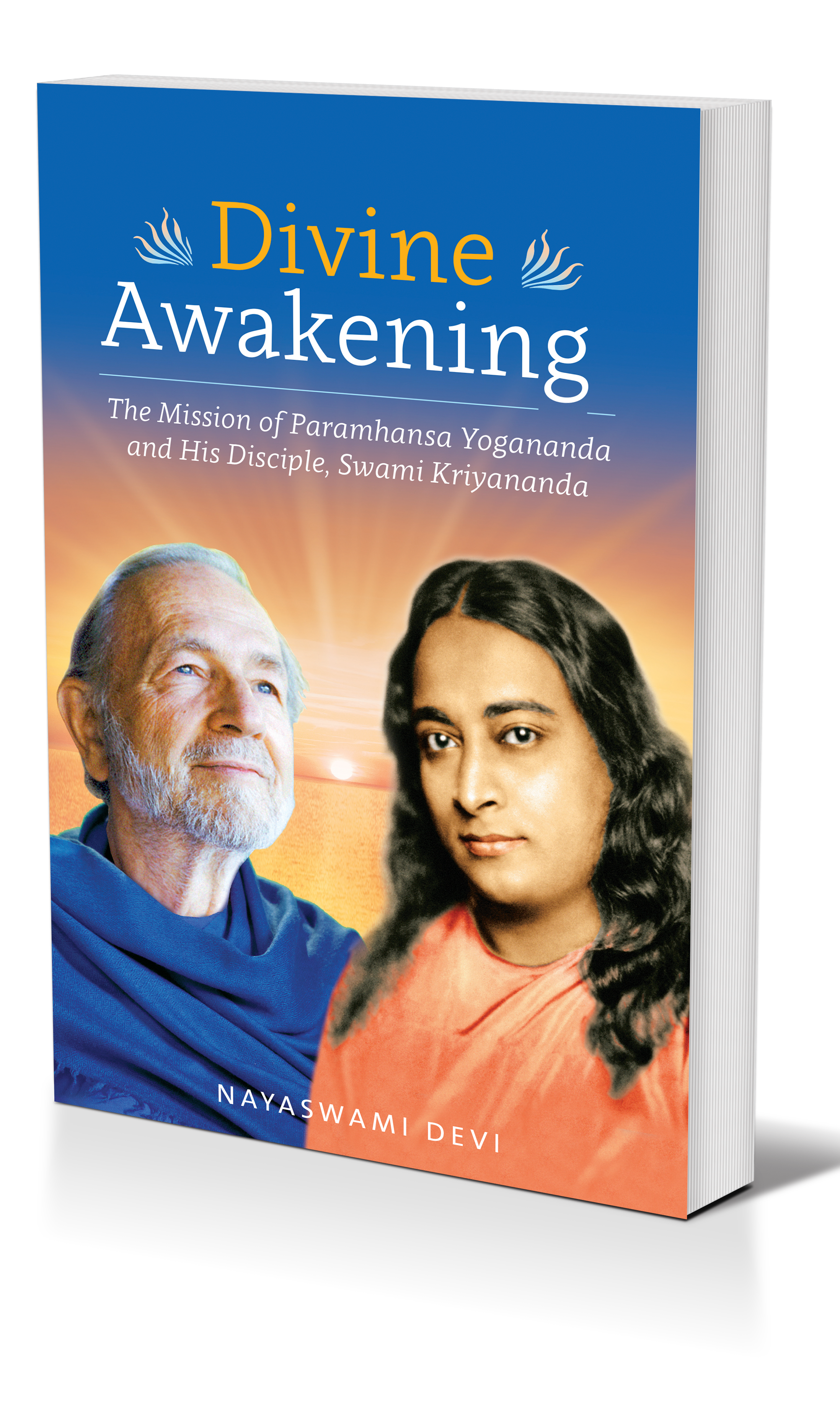
The most adept player of this game I have ever met was Swami Kriyananda. When I first met him, it seemed as though he moved to a silent, divine rhythm. He marched to the "drumless drum" of inner awakening. Through his boundless enthusiasm, his ready smile, and his deep love for God, I began to realize that there was a far greater, more beautiful game to be played than any match on a soccer field.
If you want to play this game to win, here are a few simple guidelines to keep in heart and mind:
“See nothing, look at nothing but your goal, ever-shining before you.” Keep your gaze uplifted to the spiritual eye of Self-realization.
Say YES to Life! Meet every circumstance with creative energy and willingness.
"The things that happen to us do not matter; what we become through them does." Every challenge is simply a pass of the ball, helping us grow.
“What comes of itself, let it come.” Accept everything that comes your way daily as coming directly from the hands of God.
At night, give everything back into His hands. Let go of the day's play, and rest deeply in His peace.
Joy to you,
Nayaswami Narayan
P.S. A poem about the beautiful game:
The Beautiful Game
Tikki takka
Joga bonita
socca!
The spirit of futbol
gotcha!
In the Bhav beyond time
Where you’re running breathless for the long ball
Joy unbounded,
the infinite potential enthralls!
The beautiful game
again wins your heart and friends
Tikka takka futbol,
No soccer!
That spirit of joga bonita–
Gotcha!
Don’t fight it
Surrender in joy
to your free kicks!
That footie feeling
Overcomes all reason
Tikki takka soccer
No futbol—
Gotcha!


Leave a comment
This site is protected by hCaptcha and the hCaptcha Privacy Policy and Terms of Service apply.